

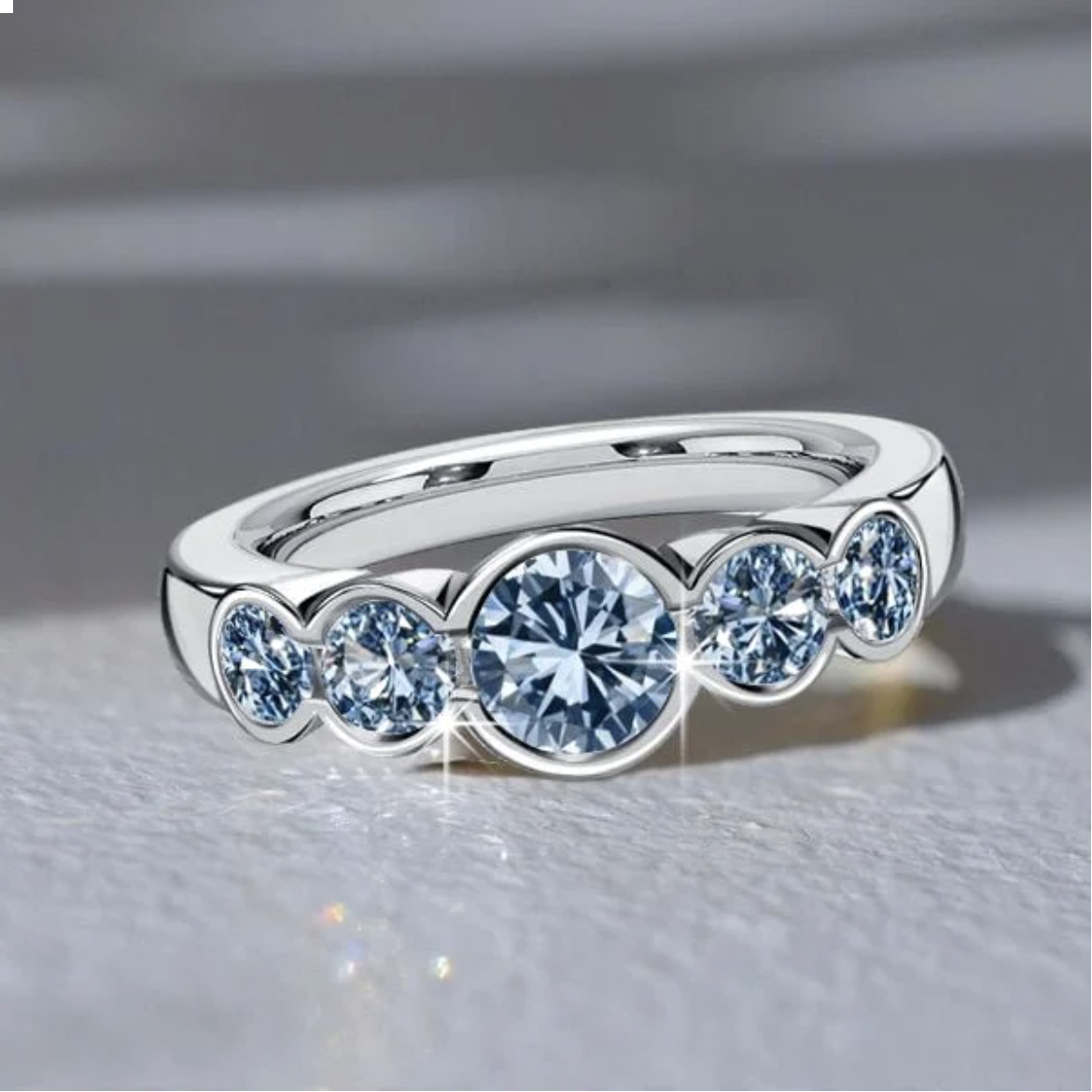
Bezel engagement rings have a personality all their own. Instead of holding the center stone with several tiny prongs, a bezel wraps a slim border of metal around its edge. The result is smooth, clean, and noticeably different from the classic solitaire most people picture when they think of an engagement ring.
Looks, however, are only part of the reason people choose this setting.
A bezel can protect the edges of a stone, reduce snagging, and create a ring that feels comfortable during everyday wear. The trade-off is that more metal surrounds the center stone, so less of it remains exposed.
If you're deciding whether this setting suits your style and lifestyle, understanding the bezel engagement ring pros and cons is a good place to start.
What Is a Bezel Engagement Ring?
A bezel setting uses a thin rim of metal to hold the center stone in place. Rather than gripping the gemstone at several individual points, the metal follows its outer edge.
There are two common approaches.
Full Bezel Setting
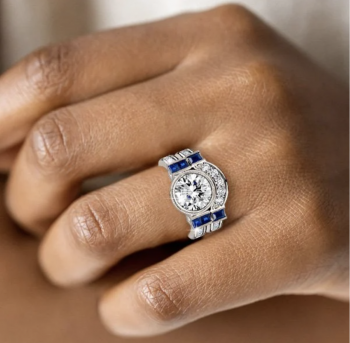
A full bezel surrounds the entire perimeter of the stone.
This creates a smooth, continuous border and provides substantial coverage around the gemstone's edges. It's the version most people have in mind when talking about the security of bezel engagement rings.
Partial Bezel Setting
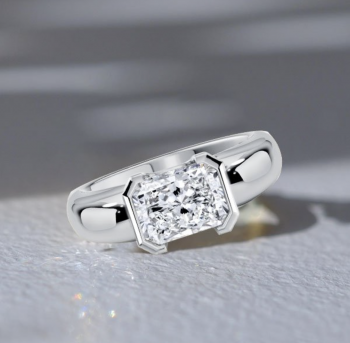
A partial bezel leaves portions of the gemstone exposed.
It still uses metal to secure key areas of the stone but creates a more open appearance. For someone who likes the practicality of a bezel but doesn't want the stone completely framed, this can be an appealing middle ground.
Bezel Engagement Ring Pros: What Makes This Setting Appealing?
The strongest reasons for choosing a bezel aren't complicated. It's secure, smooth, and practical.
Those qualities become particularly important when the ring isn't just something you'll wear for special occasions but a piece of jewelry that will be on your hand almost every day.
1. The Center Stone Gets More Protection
This is one of the biggest bezel engagement ring advantages.
With a traditional prong setting, much of the gemstone remains exposed. A bezel adds a metal border around its perimeter, helping protect vulnerable edges from everyday knocks and accidental contact.
Imagine reaching into a handbag, brushing your hand against a doorway, or accidentally tapping the ring against a countertop. These are ordinary moments, but they happen frequently over years of wear.
A bezel provides an extra barrier between the stone and the things around you.
It doesn't make a gemstone indestructible, but if protecting the center stone is one of your priorities, this setting deserves serious consideration.
2. A Bezel Setting Feels Secure
Protection isn't the same thing as security.
Protection concerns outside contact with the gemstone. Security concerns how firmly the stone remains in its setting.
Traditional settings usually depend on four or six individual prongs. A full bezel, on the other hand, secures the stone around its perimeter.
For someone who doesn't like the thought of a tiny prong bending or catching, that construction can provide extra peace of mind.
3. There Are Fewer Snagging Points
This is a small advantage that becomes surprisingly important once you wear a ring every day.
Prongs can catch.
Sweaters, hair, blankets, gloves, lace, and other delicate fabrics all seem to find their way underneath raised jewelry.
A well-designed bezel has a smoother transition from metal to gemstone, with fewer protruding points.
You may barely notice the difference when trying a ring on for five minutes. After months or years of daily wear, it's much easier to appreciate.
4. It's Practical for an Active Lifestyle
People who work with their hands often pay more attention to ring profile and security than someone shopping purely for appearance.
A streamlined bezel can be particularly appealing in this situation.
Its smoother construction is less likely to catch during ordinary activities, while the metal border offers additional protection around the stone.
Of course, an "active lifestyle" doesn't mean an engagement ring should stay on through everything. Heavy lifting, strenuous exercise, gardening, harsh chemicals, and other activities can still damage fine jewelry.
For normal everyday movement, though, a bezel can feel refreshingly uncomplicated.
5. Bezel Engagement Rings Are Comfortable
Comfort doesn't always receive much attention when people shop for engagement rings.
It should.
This is jewelry you may wear for thousands of hours. A beautiful ring that constantly catches on clothing or feels unnecessarily high on the finger can become frustrating.
A low-profile bezel often feels smooth and compact.
There are fewer sharp transitions around the center stone, and the ring can sit relatively close to the finger depending on its design.
That makes comfort one of the less glamorous—but very real—pros of a bezel engagement ring.
6. The Style Feels Clean and Distinctive
A bezel creates a defined outline around the center stone.
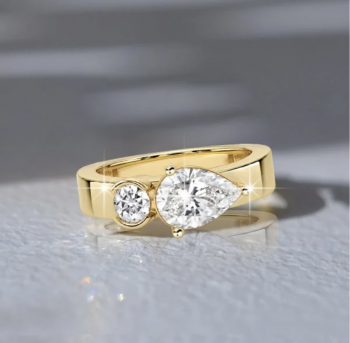
On a round gemstone, that can feel balanced and minimalist. Around an emerald cut, the same concept becomes geometric and architectural. With an oval or pear shape, it can look softer and more individual.
The surrounding metal becomes part of the design rather than disappearing behind the gemstone.
For people who find traditional prong settings a little predictable, this can be exactly the appeal.
7. It Works With More Than Round Stones
One of the pleasures of choosing a bezel is experimenting with shape.
Round stones certainly work, but they're only the beginning.
Oval, cushion, emerald, Asscher, pear, marquise, and princess-cut stones can all take on a different personality when framed by metal.
Round Bezel Engagement Rings
Round stones create perhaps the most balanced bezel look. They're simple, symmetrical, and easy to pair with different band styles.
Oval Bezel Engagement Rings
An oval center stone introduces length without losing the softness of curved edges. A thin bezel can emphasize that elongated silhouette beautifully.
Emerald-Cut Bezel Engagement Rings
An emerald cut already has strong geometry. Surrounding it with a clean metal border can make those lines even more pronounced.
The result tends to feel sophisticated rather than ornate.
Pear and Marquise Bezel Rings
These shapes have pointed ends that become a defining part of the design. A bezel traces those contours and creates a particularly distinctive silhouette.
8. Bezel Settings Can Look Beautiful With Colored Gemstones
A bezel doesn't have to surround a traditional colorless center stone.
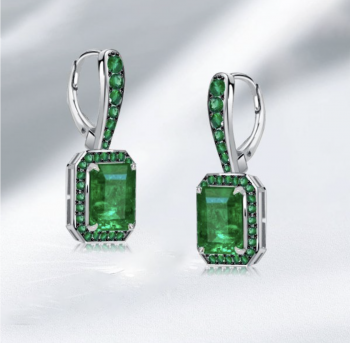
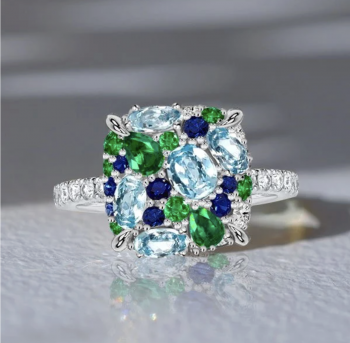
In fact, colored gemstones can be particularly attractive because the surrounding metal creates a clear frame for the color.
A rich green, blue, pink, or other colored center stone can feel completely different depending on the metal and band design around it.
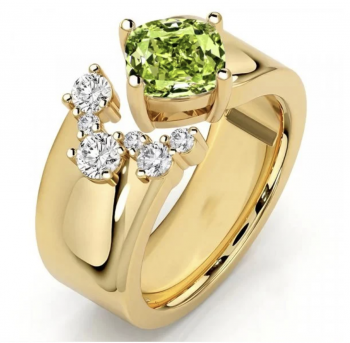
For shoppers interested in moving beyond the classic engagement-ring formula, italojewelry offers gemstone ring options that make it possible to explore different colors and styles.
Bezel Engagement Ring Cons: What Should You Consider?
The benefits are convincing, but there is another side to the story.
Some of the strongest bezel engagement ring pros are also responsible for its main disadvantages. The metal that protects the stone also covers more of it. The smooth frame that adds security also changes the appearance.
Here's where you may hesitate.
1. Less of the Center Stone Is Exposed
This is probably the most obvious disadvantage.
Prongs touch the gemstone at only a handful of points, leaving much of its perimeter visible. A full bezel wraps around that perimeter instead.
As a result, you see more metal and slightly less stone.
Whether that's actually a problem depends entirely on what you find beautiful.
Some people love the framed appearance. Others spend a significant amount on a center stone and naturally want as much of it visible as possible.
If you're in the second group, look closely at a partial bezel before dismissing the setting completely.
2. More Metal Is Visible
A bezel doesn't try to hide.
The metal border is deliberately part of the design, which means it will be visible when you look down at your ring.
With a very thin bezel, the effect can be refined and subtle. A wider bezel creates considerably more presence.
Neither approach is wrong, but the difference is significant.
If your ideal engagement ring feels light, airy, and almost entirely gemstone-focused, a heavy bezel may not give you that effect.
3. A Thick Bezel Can Overpower a Smaller Stone
Proportion matters enormously with this setting.
A fine metal border can gently emphasize the shape of a gemstone. Make that border too wide, and suddenly the metal starts competing for attention.
This can be especially noticeable around a smaller center stone.
When comparing bezel rings online, don't focus only on carat size. Look carefully at the relationship between the stone, bezel thickness, and band width.
Those three elements need to feel balanced.
4. The Stone Looks Different Than It Does in Prongs
People sometimes ask whether bezel engagement rings have less sparkle.
That's too simple a way to look at it.
A full bezel does cover more of the gemstone's sides than a prong setting, but a stone's visual performance also depends heavily on its cut, proportions, cleanliness, lighting, and the construction of the ring.
A well-cut stone can still look bright in a bezel.
What definitely changes is the visual experience.
A prong-set gemstone feels more exposed. You can often see more of it from the side, and the setting itself may seem to disappear.
A bezel gives the stone a visible boundary.
If you love that open appearance, this difference could matter more to you than any technical discussion about light.
5. Some Bezel Rings Can Be More Difficult to Resize
The difficulty of resizing depends on the complete ring design.
A simple bezel solitaire with a plain band may be relatively straightforward. A bezel combined with accent stones, intricate detailing, or decorative metalwork can be another story.
If you aren't completely certain of your ring size, ask about resizing before purchasing.
It's also worth checking the retailer's return policy when buying jewelry online.
6. It's Less Traditional Than a Classic Prong Setting
For some shoppers, that's exactly the point.
For others, it's the biggest drawback.
The familiar engagement-ring silhouette usually features a center stone lifted above the band and held by delicate prongs. A bezel produces a smoother, more enclosed appearance.
If you've always imagined yourself wearing a traditional solitaire, try both styles before deciding.
Sometimes the ring you admire in photographs isn't the one you prefer once it's actually on your hand.
Bezel vs. Prong Engagement Ring: What's the Real Difference?
Strip away all the design terminology and the choice becomes fairly straightforward.
A bezel engagement ring emphasizes protection, security, smoothness, and a defined silhouette.
A prong engagement ring emphasizes stone exposure, delicacy, and the classic solitaire appearance.
Neither approach is automatically better.
The more useful question is: Which trade-offs matter to you?
Choose a Bezel Setting If...
You frequently worry about catching your ring on things.
You prefer jewelry with smooth edges.
You want additional protection around the center stone.
You like modern, minimalist, or unconventional engagement rings.
You want something practical enough to fit naturally into everyday life.
Consider a Prong Setting If...
You want as much of the gemstone visible as possible.
You prefer a classic engagement-ring silhouette.
You like delicate settings with minimal visible metal around the center stone.
You enjoy seeing the gemstone from the side as well as from above.
Once you look at the decision this way, the bezel vs. prong setting question becomes much more personal—and much easier to answer.
Does a Bezel Setting Make a Stone Look Bigger or Smaller?
Interestingly, it can do either.
A very thin bezel can extend the visual outline of the center stone. From a normal viewing distance, your eye may read the gemstone and surrounding border as a single larger shape.
Metal color can influence this effect as well.
On the other hand, a wide or strongly contrasting bezel clearly defines the edge of the gemstone. That can make the visible stone surface feel smaller.
So if you're trying to make a center stone appear larger, don't simply look for "bezel engagement rings."
Look at the actual proportions.
A slim, carefully designed bezel will create a completely different impression from a thick metal frame.
Are Bezel Engagement Rings Good for Everyday Wear?
For many people, this is where the setting shines.
An engagement ring lives in the real world. It goes through office days, dinners, travel, shopping, commuting, and countless ordinary moments.
That's why the practical details matter.
The smooth perimeter of a bezel reduces snagging. The metal provides extra protection around the stone. A lower-profile design can also feel less intrusive on the hand.
Those qualities make bezel engagement rings especially worth considering for someone who wants to wear their ring regularly rather than saving it for special occasions.
Still, no setting turns fine jewelry into work equipment.
Remove your ring before activities involving strong impacts, heavy lifting, harsh cleaning products, or unnecessary abrasion.
Who Is a Bezel Engagement Ring Best For?
A bezel setting makes the most sense when your priorities extend beyond appearance.
You Want Security
The idea of exposed prongs makes you nervous, and you want the center stone surrounded by a more continuous setting.
You Care About Comfort
You don't want to spend years untangling your ring from sweaters and hair.
You Prefer Modern Jewelry
Clean lines and strong silhouettes appeal to you more than ornate details.
You Wear Your Jewelry Often
Your engagement ring isn't going to live in a jewelry box. You want something designed with everyday life in mind.
You Like Something a Little Different
You want an engagement ring that feels recognizable without looking exactly like every traditional solitaire.
If those descriptions sound familiar, the practical advantages of a bezel may outweigh its disadvantages.
How to Choose the Right Bezel Engagement Ring
Once you've decided that a bezel suits you, don't rush straight to stone size.
The details surrounding that stone can completely change how the finished ring looks.
Look Closely at Bezel Thickness
This is one of the first things to notice.
A thin bezel keeps the design light and allows the gemstone to remain visually dominant.
A wider bezel creates a bolder outline and makes the metal a stronger part of the overall design.
Neither choice is inherently better. The key is proportion.
Think About the Ring Profile
Do you want the center stone sitting close to your finger, or do you prefer a little height?
Lower profiles tend to emphasize practicality and comfort. Raised designs can give the stone more presence.
If you're planning to wear wedding bands beside the engagement ring, also consider how the rings will sit together. Some low-profile bezel designs may leave a small gap between the engagement ring and band, while other settings are designed to accommodate a closer stack.
Don't Default to a Round Stone
Round stones are timeless, but a bezel gives you an excellent opportunity to experiment.
An oval can lengthen the appearance of the finger. An emerald cut can create a crisp, sophisticated look. A pear shape feels more unusual, while a cushion cut softens the geometry of the metal border.
Choose the shape because you genuinely love it—not simply because it's familiar.
Consider a Gemstone Ring
Color can completely transform a bezel design.
A colored gemstone framed in metal can feel romantic, vintage-inspired, playful, or contemporary depending on the combination.
When purchasing jewelry online, shopping policies also deserve attention. ItaloJewelry provides FREE SHIPPING on any order, a 60-DAY Return policy, a ONE-YEAR Warranty, and 100% SECURE Payment, giving shoppers more flexibility when considering different designs.
Frequently Asked Questions About Bezel Engagement Ring Pros and Cons
What Are the Main Pros of a Bezel Engagement Ring?
The most important advantages are security, protection, comfort, reduced snagging, and a smooth appearance.
Because the metal surrounds the perimeter of the gemstone, a bezel is particularly attractive to people who want an engagement ring designed with everyday wear in mind.
What Are the Main Cons of a Bezel Engagement Ring?
A full bezel covers more of the gemstone and adds a visible metal border around it.
Some people also find bezel settings visually heavier than delicate prongs, particularly when the bezel is relatively thick.
Are Bezel Engagement Rings More Secure Than Prong Settings?
A full bezel holds the stone around much of its perimeter instead of relying on several individual prongs, which gives the setting a secure construction.
However, quality matters regardless of setting style. Good craftsmanship and appropriate maintenance remain important.
Do Bezel Engagement Rings Have Less Sparkle?
Not necessarily.
The bezel covers more of the gemstone's sides, but sparkle depends heavily on factors such as the stone's cut, proportions, cleanliness, and lighting.
A well-cut gemstone can still look lively and bright in a bezel setting.
Does a Bezel Setting Make a Diamond Look Bigger?
It can create that impression, particularly when the bezel is thin and visually blends with the stone.
A thick or contrasting bezel may produce the opposite effect by making the gemstone's actual outline more obvious.
Are Bezel Engagement Rings Good for Active People?
They can be a practical choice because of their smooth profile, reduced snagging points, and protected gemstone edges.
That doesn't mean they should be worn during every physical activity. Fine jewelry still benefits from sensible care.
Can You Put a Gemstone in a Bezel Engagement Ring?
Yes. Colored gemstones can work beautifully with bezel settings.
The metal border helps define the stone's shape and can create an attractive contrast with its color, making gemstone bezel rings an interesting alternative to more traditional engagement-ring designs.


 © 2026 by Italojewelry®. All Rights Reserved.