

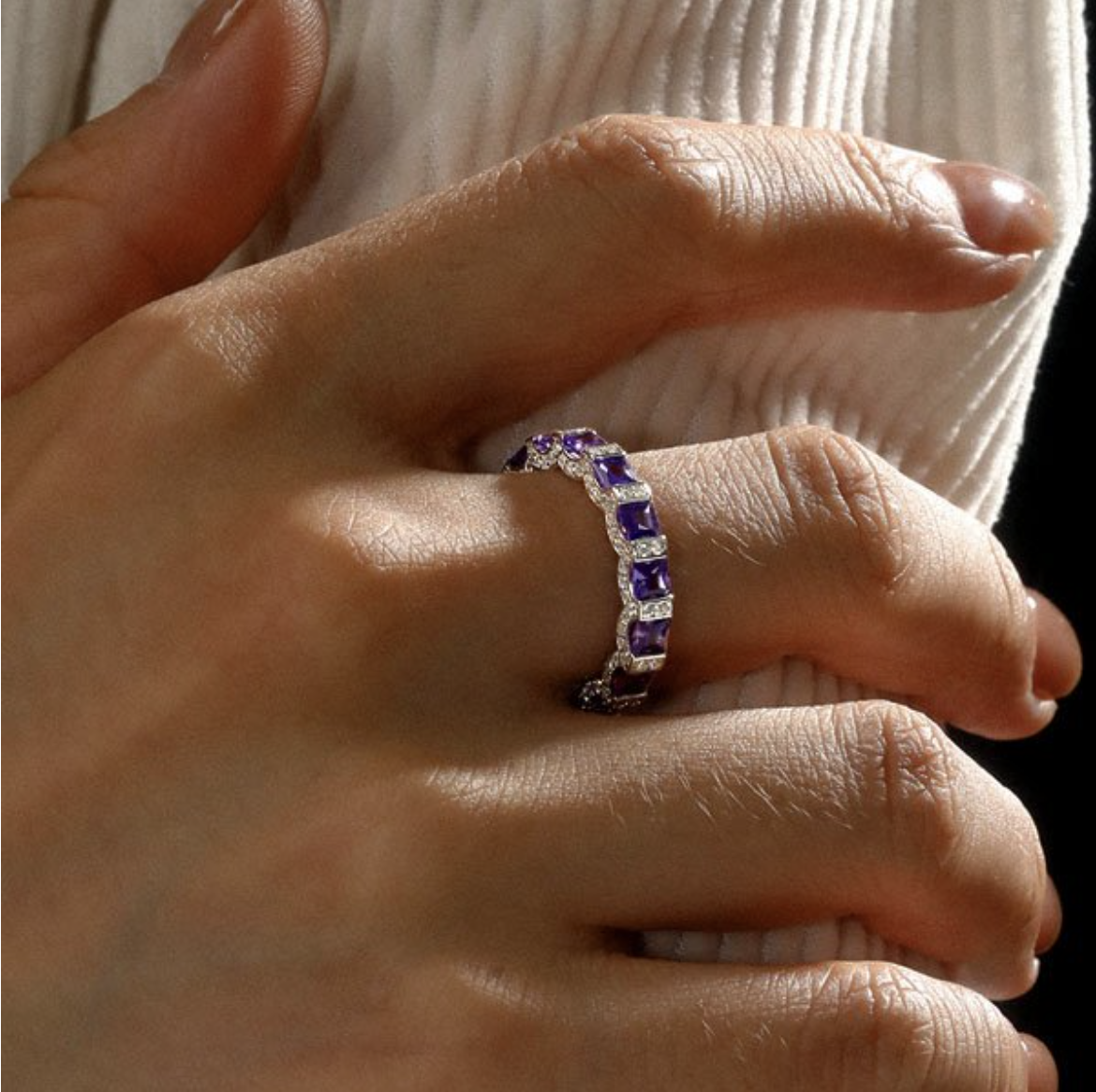
An amethyst wedding ring offers a distinctive alternative to conventional diamond jewelry. Recognized by its purple color, amethyst can appear in shades ranging from pale lilac to deep violet. This variety makes the stone suitable for both understated ring designs and more expressive wedding jewelry.
Choosing an amethyst ring is not only a matter of appearance. Buyers should also consider the stone’s symbolism, durability, setting, and everyday care. Understanding these details can help couples decide whether amethyst is appropriate for their wedding rings.
The Meaning Behind an Amethyst Wedding Ring
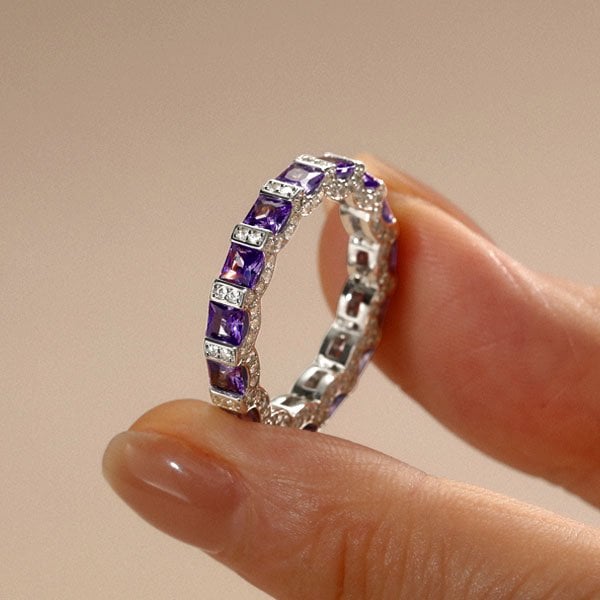
Amethyst has long been associated with calmness, clarity, sincerity, and emotional balance. These qualities give an amethyst wedding ring a meaning that fits naturally with marriage and long-term commitment.
The gemstone is also the traditional birthstone for February. For someone born in that month, an amethyst ring can connect a wedding milestone with personal history. Other couples may choose the stone because purple holds sentimental value or simply feels more individual than a colorless gemstone.
Although symbolism can add significance, there is no single rule governing what an amethyst wedding ring must represent. Its meaning may come from the couple’s relationship, a shared memory, or the circumstances surrounding the proposal.
Why Couples Choose Amethyst for Wedding Rings
Color is one of the main reasons people are drawn to amethyst. Deep violet stones tend to create a dramatic effect, while lighter lavender tones feel softer and more delicate. The color also works well with different metals.
White gold and platinum can bring out the cooler tones of the gemstone. Yellow gold creates a warmer contrast, while rose gold complements the red and pink undertones found in some amethysts. The best combination depends on the wearer’s skin tone and personal preferences.
Another advantage is design flexibility. An amethyst can be used as the central stone in a traditional ring or placed among smaller accent stones. It also suits vintage, modern, nature-inspired, and minimalist settings.
Popular Amethyst Wedding Ring Designs
A solitaire design places the amethyst at the center of attention. It is a practical choice for anyone who prefers a clean appearance without additional gemstones. Oval, round, emerald-cut, and cushion-cut amethysts are commonly used for solitaire rings.
Halo settings surround the main stone with smaller gemstones. A diamond halo can increase contrast and brightness, especially around a dark purple amethyst. However, halos contain more small components and may require closer inspection during cleaning.
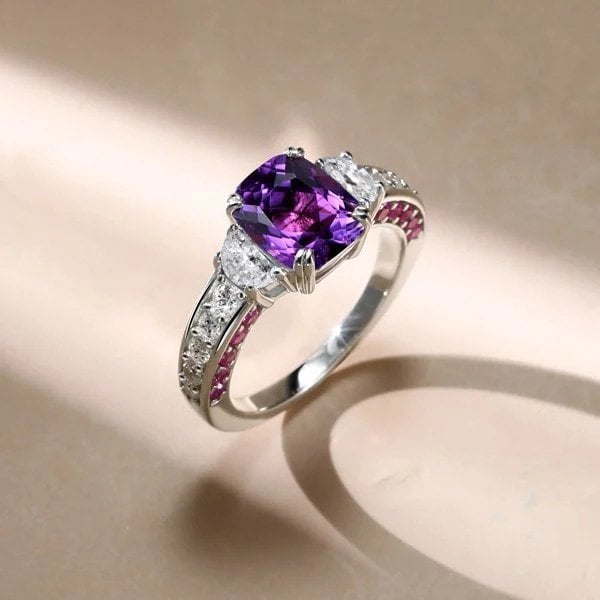
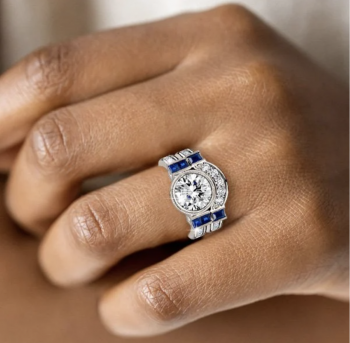
Three-stone rings are another meaningful option. The stones are often interpreted as representing the past, present, and future of a relationship. The center amethyst may be paired with diamonds, sapphires, or smaller amethysts.
Vintage-inspired rings often include milgrain edges, engraved bands, or detailed side settings. These elements give the ring character, although intricate designs can collect more residue than smooth bands.
For people with active routines, a bezel-set amethyst wedding ring may be worth considering. The metal surrounds the gemstone’s outer edge, offering more protection than an exposed prong setting.
Selecting the Right Shade of Amethyst
Amethyst color varies considerably. Some stones have an even violet appearance, while others contain visible areas of lighter and darker color. This variation is known as color zoning.
A darker gemstone is not automatically better. Very deep stones may look almost black under weak lighting, reducing the visibility of their purple tones. Pale amethysts can have an airy appearance but may lack the visual intensity some buyers expect.
It is useful to view the ring under more than one type of light. Natural daylight, warm indoor lighting, and bright store lighting can each change how the gemstone appears. Photographs alone may not fully represent its actual color.
Clarity also matters. Many amethysts are relatively clear to the unaided eye. Small internal features are natural, but large fractures or inclusions near the surface may affect durability.
Is Amethyst Durable Enough for Everyday Wear?
Amethyst has a hardness of 7 on the Mohs scale. It is reasonably durable, but it is not as resistant to scratching as diamond, sapphire, or ruby. An amethyst wedding ring can be worn regularly when handled with appropriate care, though it may not be ideal for every activity.
The ring should be removed before gardening, lifting heavy objects, exercising, or using household chemicals. Direct impact against a hard surface may chip the gemstone or loosen its setting.
Long exposure to intense sunlight or heat should also be avoided because it may alter the stone’s color. When the ring is not being worn, it is better to store it separately from harder jewelry that could scratch the amethyst.
How to Clean an Amethyst Wedding Ring
Routine cleaning does not require complicated equipment. A bowl of lukewarm water mixed with a small amount of mild soap is usually sufficient. After soaking the ring briefly, use a soft brush to clean around the stone and setting. Rinse it carefully and dry it with a lint-free cloth.
Avoid harsh cleaners, steam cleaning, and sudden temperature changes. Ultrasonic equipment may not be suitable for stones with fractures or certain treatments. If the ring has an elaborate setting or feels loose, professional inspection is safer than aggressive cleaning at home.
Regular checks are especially important for prong-set rings. A bent or worn prong can allow the gemstone to move and may eventually result in loss.
Matching an Amethyst Ring with a Wedding Band
The shape and height of the engagement ring setting determine how well it fits beside a wedding band. A high-set amethyst often leaves enough room for a straight band. Low or decorative settings may require a curved or contoured band.
Metal color does not have to match exactly. Some couples intentionally combine white, yellow, and rose gold. Mixed metals can look balanced when there is a repeated detail connecting the two rings.
The gemstone’s proportions should also be considered. A large amethyst may extend across the finger and leave limited space for a wide wedding band. Trying the rings together is the simplest way to evaluate comfort and visual balance.
What to Review Before Buying
Before selecting an amethyst wedding ring, examine the stone’s color, clarity, cut, and setting. The cut should distribute light evenly and should not leave the center looking dull or transparent. The gemstone also needs to sit securely without catching excessively on clothing.
Ring size and resizing options are worth confirming in advance. Bands with gemstones around the entire circumference can be difficult to resize. Buyers should also review shipping, returns, warranties, and payment security rather than focusing only on the appearance of the ring.
For example, italojewelry offers helpful service terms for people considering a gemstone ring, including FREE SHIPPING Any order, a 60-DAY Return policy, a ONE-YEAR Warranty, and 100% SECURE Payment. These services are useful because they give buyers time to inspect the ring and understand what support is available after purchase. The service provided by italojewelry is very good, but shoppers should still read the full terms and confirm that the ring’s specifications suit their needs.
Making a Personal and Practical Choice
An amethyst wedding ring stands out through color rather than convention. Its purple gemstone can carry personal meaning while supporting a wide range of styles, from simple solitaires to detailed vintage settings.
The most suitable ring is one that balances appearance with everyday practicality. A secure setting, comfortable band, well-cut gemstone, and realistic care routine matter as much as color. When these factors are considered together, an amethyst wedding ring can become a thoughtful and enduring symbol of marriage.


 © 2026 by Italojewelry®. All Rights Reserved.